What Documents Can A Mobile Notary Notarize?

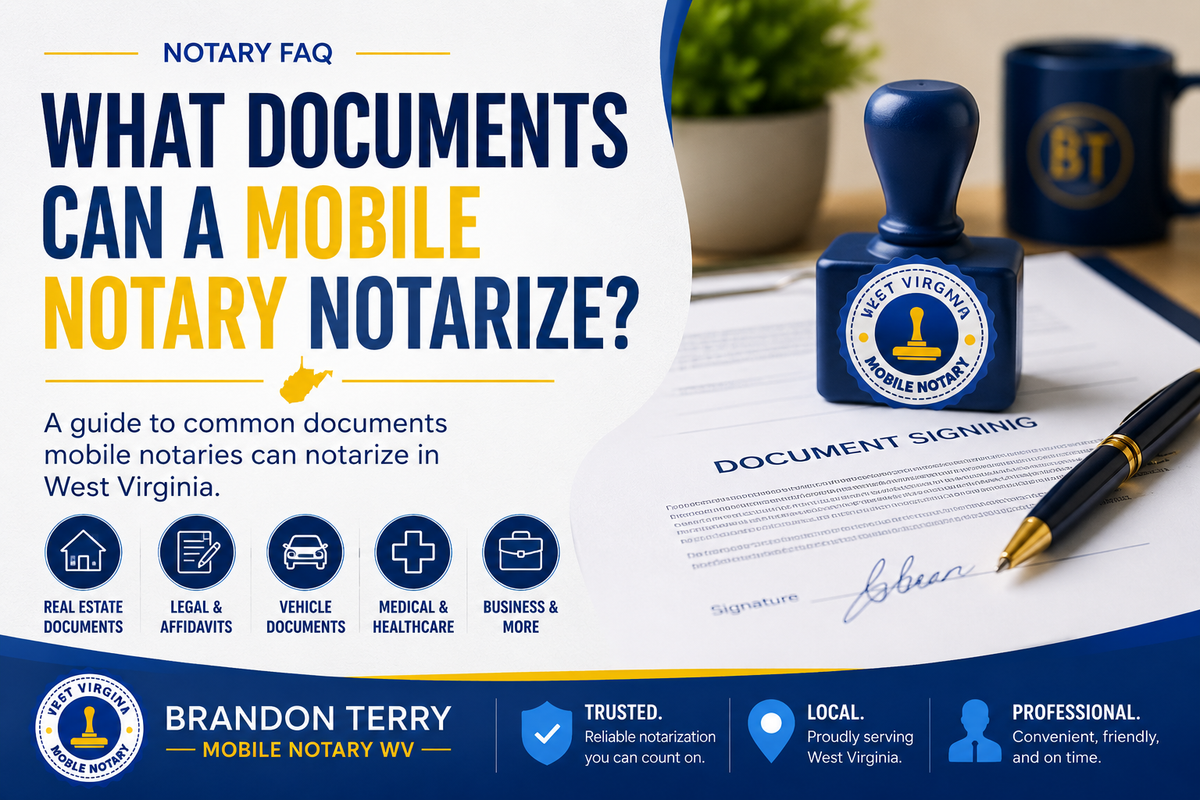
One of the most common questions people ask is:
“What kinds of documents can a mobile notary actually notarize?”
The answer surprises a lot of people.
Mobile notaries can notarize many different types of documents as long as:
- the signer appears willing
- the signer understands the document
- proper identification is provided
- and the notarization follows West Virginia law
A notary does not approve or create the document itself. The notary’s role is to verify identity, witness signatures when required, and complete the notarization properly.
Common Documents A Mobile Notary Can Notarize
Some of the most common notarized documents include:
Real Estate Documents
- mortgage paperwork
- refinance documents
- deeds
- closing paperwork
- property transfer forms
Power Of Attorney Documents
These documents allow someone to act on another person’s behalf for financial, legal, or medical matters.
Medical And Healthcare Documents
- advance directives
- living wills
- healthcare surrogates
- medical authorization forms
Vehicle Documents
- title transfers
- bill of sale documents
- DMV paperwork
- affidavit forms
Legal Documents
- affidavits
- sworn statements
- settlement paperwork
- court-related forms
Business Documents
- contracts
- partnership agreements
- vendor paperwork
- financial forms
Personal Documents
- travel consent forms for minors
- school forms
- identity affidavits
- permission forms
- handwritten statements
What A Notary Cannot Do
There are also important limitations.
A notary cannot:
- give legal advice unless they are also a licensed attorney
- explain legal consequences of documents
- choose documents for you
- notarize incomplete documents
- notarize without proper identification
- or notarize if the signer does not appear aware and willing
In West Virginia, notaries must follow specific laws and procedures designed to protect the signer and prevent fraud.
Mobile Notary Services Make The Process Easier
A mobile notary travels to the signer instead of requiring the signer to travel to an office.
Appointments are commonly completed at:
- homes
- businesses
- hospitals
- nursing homes
- coffee shops
- attorney offices
- assisted living facilities
- and other agreed-upon locations
For many people, especially during busy schedules or medical situations, mobile notarization is simply more convenient.
Identification Is Required
Before all notarizations, the signer must present acceptable identification.
This commonly includes:
- a driver’s license
- state-issued ID card
- passport
- or another valid government-issued photo ID
The ID typically must:
- be current or recently expired within legal allowances
- contain a photograph
- match the signer appearing before the notary
Final Thoughts
Mobile notaries help people complete a wide variety of important documents every day.
Whether it’s real estate paperwork, healthcare documents, legal forms, or personal affidavits, the goal of notarization is to help confirm identity and protect against fraud during the signing process.
If you are unsure whether a document can be notarized, it’s always best to ask ahead of time before scheduling an appointment.